By Lynn Michelsen, Business Manager, Crossroads at Big Creek
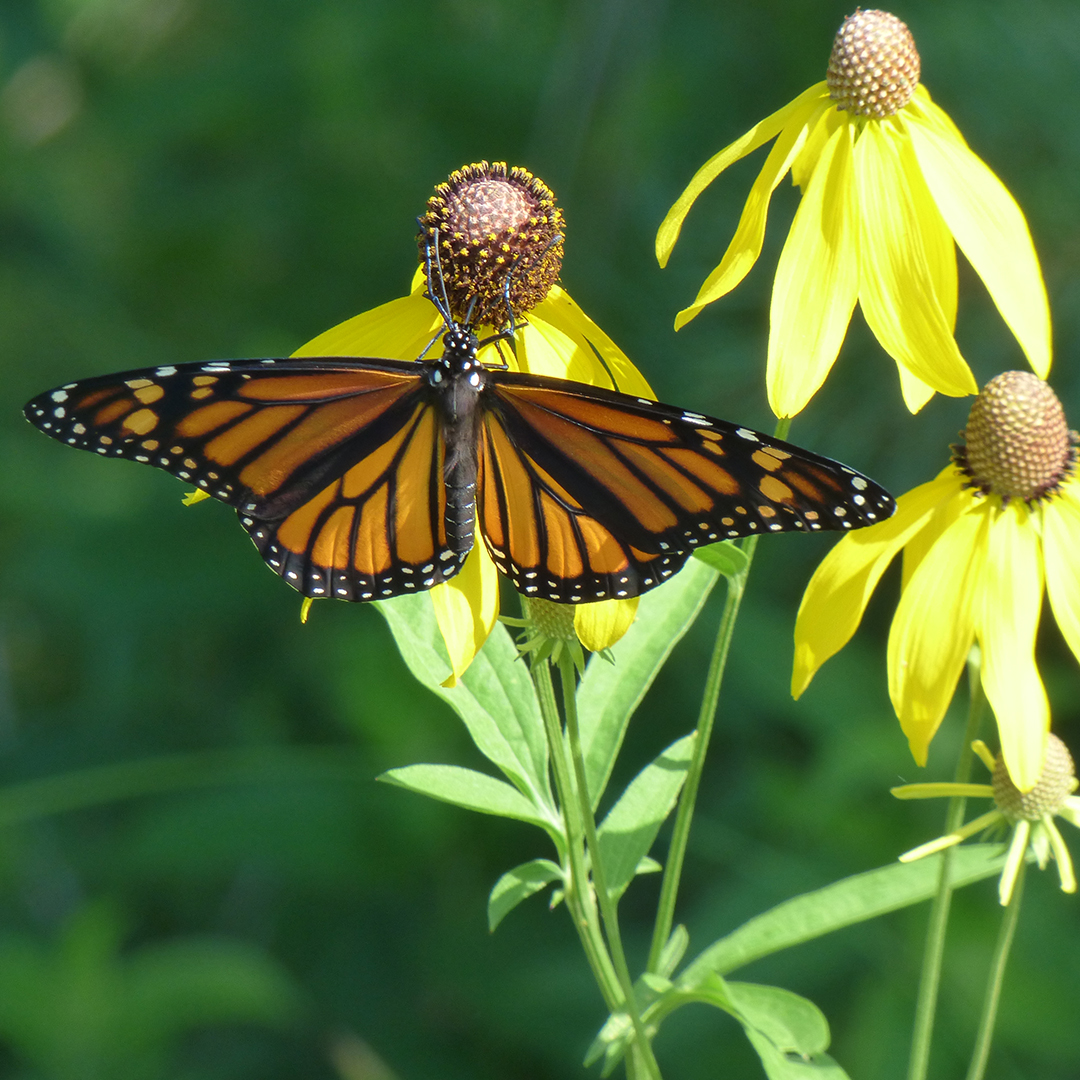
“Butterflies” is this week’s Summer at Crossroads theme, and this time of year our meadows, gardens, and open fields are alive with color and motion as butterflies move through one of nature’s most remarkable transformations—from egg to caterpillar to chrysalis to winged adult. These insects are important pollinators, and their life cycles are closely tied to specific host plants and seasonal blooms.
These insects are important pollinators, and their life cycles are closely tied to specific host plants and seasonal blooms. For example, monarch caterpillars depend on milkweed species (Wisconsin is home to 13 native types), meadow fritillary caterpillars rely on violets, and black swallowtail caterpillars depend on plants in the carrot family—such as dill, carrots, and Golden Alexander.
As these amazing insects mature into winged adults their needs change shifting their diet from their nursery plants to nectar-rich blooms. Examples of these include milkweeds blazing star, coneflowers, and beebalm.
The week starts with a Tale. At 2 pm on Monday, July 13, Door County Librarian will read the storybook, “The Amazing Life Cycle of Butterflies” written by Kay Barnham and illustrated by Maddie Frost. Perfect for curious young readers, this beautifully illustrated picture book explores one of nature’s most fascinating questions: how does a butterfly grow? Children will follow the remarkable transformation from tiny egg to crawling caterpillar, then to a resting chrysalis, and finally to a graceful butterfly taking flight—all while discovering engaging science facts along the way. (And for those who can’t make the story time, the pages of this book will be posted all week long on our Trail Tales storybook walk, which starts at our West Trailhead.)
Journeys with Joan, our weekly family program, will explore Butterflies: Masters of Transformation at 1 pm on Tuesday, July 14. Naturalist Joan Wilkie will guide participants in understanding metamorphosis and encourage them to seek summer butterflies in Crossroads’ gardens, meadows, and fields—discovering along the way how even small creatures play a big role in sustaining the mammals we share the landscape with.
Hikers participating in Wandering Wednesday at 1:30 pm will be encouraged to seek summer butterflies in Crossroads’ gardens, meadows, and fields, where nectar-rich flowers attract a wide variety of species. From monarchs and swallowtails to painted ladies and sulfurs, each butterfly plays a role in pollination as they move from bloom to bloom in search of energy-rich nectar.
For our 2 pm Thursday Talk on July 16, join Karen Newbern, Nursery Manager at Door Landscape & Nursery, for an inspiring program on creating a garden that truly comes alive. Karen will share practical guidance on designing a butterfly garden that supports both beauty and biodiversity, including how to select plants that attract butterflies throughout their entire life cycle—from egg and caterpillar to chrysalis and adult.
Participants will learn the difference between host plants, which caterpillars rely on for food, and nectar plants, which fuel adult butterflies, as well as how to plan for continuous blooms from spring through fall. Karen will also discuss how thoughtful garden design can provide the essential elements butterflies need—sun, shelter from wind, and access to water.
Drawing on her professional experience, Karen will offer tips tailored to northern Wisconsin gardens, including native plant recommendations, maintenance strategies, and design ideas that work in spaces of all sizes—from small backyard plots to school gardens and larger landscapes.
And throughout the week… and the rest of summer, stop by during open hours for Tinkers, self-led, hands-on activities designed for curious minds inspired by these winged pollinators.
Butterflies are not only beautiful, but biologically complex. Their wings are covered in tiny overlapping scales that create color through both pigment and light refraction, and their long, coiled proboscis allows them to sip nectar from deep within flowers. Because they are sensitive to environmental changes, butterflies are also important indicators of ecosystem health.
Thanks to the generosity of our donors, Crossroads trails are open all day, every day, free of charge.


 ALL CONTENT © 2026 BY DOOR GUIDE PUBLISHING


