By Coggin Heeringa, Crossroads at Big Creek
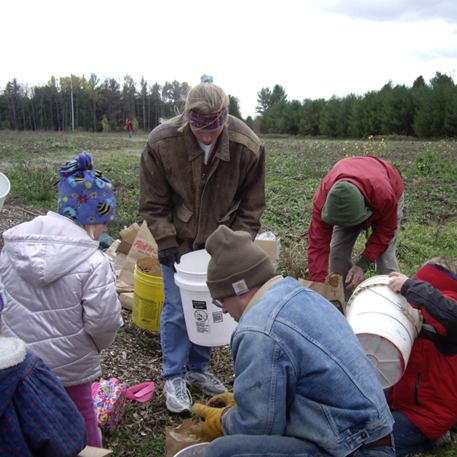
Spring has come…finally. And at Crossroads at Big Creek, we’re ready.
We’ll be celebrating May Day during our Science Saturday program—and really, all week long. Traditionally, May Day in many European countries meant welcoming spring with music, dancing, and maypoles. A celebration of renewal. That part still fits.
But “May Day” acquired a additional meaning in the 1920s.
Back when aviation was just getting off the ground, radios were unreliable—full of static and confusion. Pilots and air traffic controllers needed a clear, unmistakable distress call. A British radio officer, Frederick Stanley Mockford, was asked to come up with one that both English and French speakers would understand. He suggested “Mayday,” from the French m’aidez—“help me.”
By 1927, repeating “Mayday” three times became the official international distress call. It still is.
So—do animals have their own version of “Mayday”?
In many cases, yes.
Birds often signal danger with alarm calls. One of the easiest to observe is the black-capped chickadee. When it’s relaxed, you hear the familiar “chickadee.” When it senses danger, it adds more “dees.” More “dees” means more danger.
And other animals are listening. And like gawkers rushing to the scene of an accident, chickadees, other songbirds, even sometimes mammals respond. They gather and harass the predator—mobbing it until it gives up and moves on. There’s safety in numbers.
Insects send warnings too, often chemically. Yellowjackets release alarm pheromones that call in reinforcements—fast. Honeybees do something similar. Beekeepers tell us that an alarmed hive gives off a scent a bit like artificial banana flavoring, triggering guard bees to defend the colony.
We’re not in distress at Crossroads—but we do send out our own version of a Mayday now and then. When we need volunteers, we call out on Facebook, on our website, and through email. The easiest way to answer is to sign up online—you’ll get a friendly nudge when help is needed. And this spring, there will be plenty of opportunities.
Which brings us to this week. We have lots of outdoor activities (and school groups) plus on Tuesday, May 5 at 1:30 PM, we have a unique program: “Lasers and Lightsabers.” Brian Lindow draws on his work at Lawrence Livermore National Laboratory and his years at Skywalker Ranch to connect cutting-edge science with behind-the-scenes storytelling. The program includes a short segment from 60 Minutes on fusion ignition at the National Ignition Facility, along with stories and images from his time working with George Lucas. It wraps up with a hands-on science showcase. Free and open to all ages.
Spring is awakening. Help us celebrate.

 ALL CONTENT © 2026 BY DOOR GUIDE PUBLISHING


